
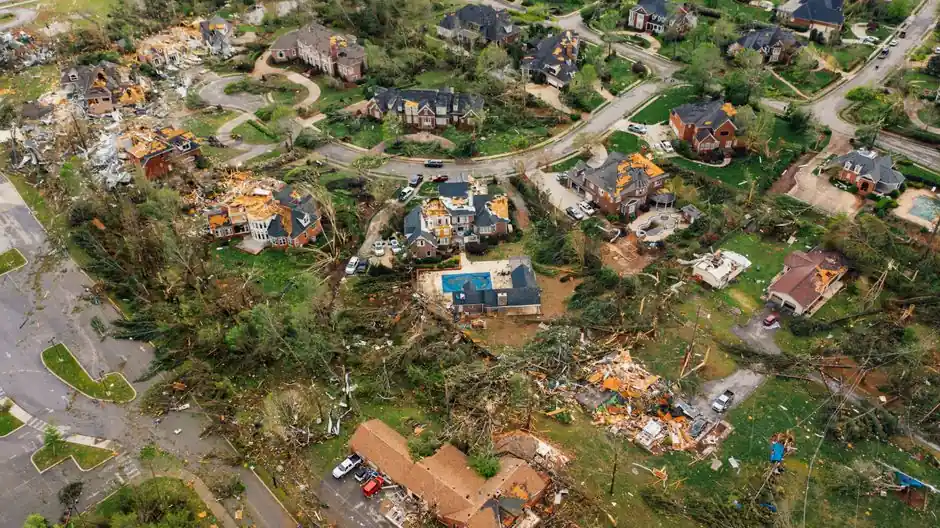
You can usually tell your roof has storm damage by looking for missing or lifted shingles, granules in your gutters, dents on metal surfaces, and new water stains on ceilings or in the attic. If any of those show up after a heavy rain, wind, or hail event, assume the roof has been compromised until a professional says otherwise. This guide walks through the specific signs we look for on New York roofs, how to check safely from the ground, and what to do next.
We are RoofPros New York, and we have climbed thousands of roofs across the region after nor'easters, summer microbursts, and the occasional hail event that rolls off the Hudson Valley. The patterns repeat. Below is what we actually see, in the order we see it.
How to Tell If Your Roof Has Storm Damage: The Short Answer
How to tell if your roof has storm damage is a visual inspection process that checks for displaced shingles, exposed underlayment, granule loss, and interior water intrusion after any significant weather event. You do not need to climb up there to start. Stand back with binoculars, walk the perimeter, and look at the gutters and downspouts first.
Three things almost always confirm damage: shingles on the ground, dark patches on the roof plane where granules have washed away, and water stains on the underside of your roof deck. Any one of those means you should schedule a roof inspection in New York before the next storm hits.
One more thing worth knowing: storm damage is rarely uniform. A single wind gust can tear shingles off one slope and leave the other three untouched. That is why a roof that looks fine from the street can still be leaking.
What Does Storm Damage Look Like on a Roof in New York?
Storm damage on a New York roof looks different depending on what hit it. Wind leaves a signature. Hail leaves a different one. Heavy rain and ice dams leave a third. Learning to read those signatures tells you what kind of repair you are facing.
Wind damage
Wind is the most common culprit in our area. A 60 mph gust can lift the edge of an asphalt shingle and break the seal strip that holds it down. Once that seal breaks, the next gust flips the shingle entirely. You will see shingles creased down the middle, shingles sitting at an angle, or a clean rectangular gap where a shingle used to be.
Wind also drives rain sideways into places it should never reach: ridge vents, pipe boots, and chimney flashing. That is why a wind-damaged roof often leaks far from where the shingles are missing.
Hail damage
Hail leaves round dents and bruises. On asphalt shingles, look for soft spots the size of a quarter where the mat underneath has been crushed. On gutters, downspouts, and vents, look for dimples. Hail damage is cumulative - one storm may only bruise the shingles, but the next one tears them apart.
Rain and ice damage
Heavy rain finds every weak point. Ice dams form along the eaves when snow melts on the warm part of the roof and refreezes at the cold edge. The ice backs water up under the shingles, and that water shows up as a brown ring on your ceiling weeks later. We see this most often on older homes in Roofing in Albany, where steep pitches and mature tree cover combine to hold snow longer than the rest of the state.
The 8 Most Common Signs of Storm Damage on Roofs in New York
The most common signs of storm damage on roofs in New York are visible from the ground if you know where to look. Here is the checklist we run through on every post-storm call.
- Missing or lifted shingles. Check the slopes that face the prevailing wind. In most of New York, that is the south and west sides.
- Granules in gutters and at downspout outlets. A handful of granules after a storm is normal. A cupful means the shingles are shedding their protective surface.
- Dark or shiny patches on the roof plane. Those are spots where the granules are gone and the asphalt mat is exposed to UV.
- Dents on gutters, vents, and flashing. Hail hits metal first and hardest.
- Water stains on ceilings or attic rafters. Brown rings, bubbling paint, and dark streaks on roof decking all point to a leak.
- Daylight visible through the roof boards. If you can see light from inside the attic, water can get in too.
- Loose or missing flashing around chimneys, skylights, and vents. Flashing takes the brunt of wind-driven rain.
- Sagging roof lines or a spongy feel underfoot. This points to saturated decking and possible structural damage.
If you check off two or more of these, treat it as a storm damage roof repair in New York situation rather than a wait-and-see.
How to Check Your Roof for Storm Damage in New York (Safely)
How to check your roof for storm damage in New York without putting yourself at risk comes down to three zones: the ground, the attic, and the edges. Stay off the roof itself unless you have fall protection and experience - wet shingles are slick, and a two-story fall is a life-changing event.
From the ground
Walk the perimeter with binoculars. Look at every roof plane, not just the one facing the street. Pay attention to valleys, ridges, and anywhere a roof meets a wall or chimney. Those are the leak magnets.
From the attic
Bring a flashlight. Look at the underside of the roof deck for dark stains, white chalky lines (those are water tracks), and rusted nails. Check around chimneys, vents, and the ridge. If you see daylight, you have found a breach.
From the gutters
After the roof is dry, scoop a handful of debris from the gutter. If it is mostly granules, the shingles are aging fast. If you find shingle fragments, the roof has already lost material.
One safety note: never walk a roof that has just been hit by hail or wind. The surface can be compromised in ways you cannot see from the ladder. That is a job for a roof repair contractor New York homeowners trust to know the difference between cosmetic wear and structural failure.
What to Do If You Suspect Storm Damage on Your Roof in New York
What to do if you suspect storm damage on your roof in New York is straightforward: document it, protect the interior, and get it inspected before you file or accept any insurance settlement. The order matters.
- Take photos and video. Capture the roof from the ground, the gutters, the attic, and any interior stains. Note the date of the storm.
- Stop the water. If water is actively coming in, put buckets down and move furniture. Do not tarp the roof yourself unless you can do it from the ground with a pole - climbing a damaged roof is how people get hurt.
- Call for a professional inspection. A written report with photos is what your insurance adjuster needs.
- Notify your insurer. Most policies require prompt notice. New York does not set a hard deadline for filing, but waiting months weakens your claim.
- Do not sign anything from a door-knocking contractor before you have an independent inspection.
We handle the inspection and the repair under one roof, which keeps the paperwork clean. If you want to understand what a proper assessment covers, our roof maintenance in New York program includes a post-storm check as part of the annual visit.
Common Mistakes Homeowners Make After a Storm
The biggest mistake we see is waiting. A small leak after a storm becomes a rotted deck, a stained ceiling, and a mold problem within a single season. Here are the others.
- Assuming the insurance adjuster will find everything. Adjusters are busy after a major storm and often miss damage on slopes they cannot easily see. Your own inspection report fills the gaps.
- Hiring the first contractor who knocks. After every big storm, out-of-state crews show up, collect deposits, and disappear. Ask for a local address and a New York license.
- Patching one shingle and calling it done. If one shingle blew off, the ones around it are compromised too. A proper repair replaces the whole damaged section.
- Ignoring interior signs because the roof looks fine. Water travels. A stain in the middle of your ceiling can come from a breach 15 feet away.
- Waiting for the next storm to "confirm" the damage. By then, the repair is bigger and the insurance claim is harder.
We see this every spring in the older neighborhoods around Roofing in Bay Shore, where salt air and winter wind work together on shingles that were already near the end of their life. A five-minute inspection in March saves a full replacement in July.
When to Call a Professional
Call a professional the moment you see water inside the house, missing shingles over more than a few square feet, or any sagging in the roof line. Those are not DIY fixes. Neither is anything involving your insurance claim.
Our team at RoofPros New York handles storm damage inspections, emergency tarping, and full repairs across the region. We document everything with photos, explain what we find in plain language, and give you a written scope before any work begins. If the damage is minor, we will tell you that too.
If you are not sure whether what you are seeing is storm damage or normal wear, that is exactly the call to make. A 30-minute inspection now beats a ceiling replacement later.
Frequently Asked Questions
How can I tell if my roof has storm damage in New York?
Look for missing or lifted shingles, granules in the gutters, dents on metal flashing, and water stains on ceilings or attic rafters. If two or more of those are present after a storm, schedule a professional inspection within a week.
What does storm damage look like on a roof in New York?
Wind damage shows as creased, flipped, or missing shingles, usually on the south and west slopes. Hail leaves round bruises and dents on shingles and metal. Rain and ice damage shows up as interior stains and ice dams along the eaves.
Should I get a roof inspection after a storm in New York?
Yes, if the storm produced hail larger than a pea, wind gusts over 50 mph, or any water inside the house. A professional inspection takes under an hour and gives you the documentation your insurer needs if you file a claim.
Who repairs storm damaged roofs in New York?
Licensed roofing contractors with storm damage experience. RoofPros New York handles inspections, emergency tarping, and full storm damage repairs across the region. Call (833) 829-2623 to schedule.
How much does storm damage roof repair cost in New York?
Typical 2026 pricing in this area runs $400 to $1,500 for minor shingle and flashing repairs, and $3,000 to $12,000 for larger sections or partial replacements. Insurance often covers most of the cost when the damage is storm-related.
Get Help with Roofing in New York
If you have read this far and something on your roof matches what we described, do not wait for the next storm to make it worse. Our team can be on your roof this week with a full inspection and a straight answer.
Call RoofPros New York at (833) 829-2623 to schedule your post-storm roof inspection. We will tell you what is damaged, what is not, and what it will take to fix it.