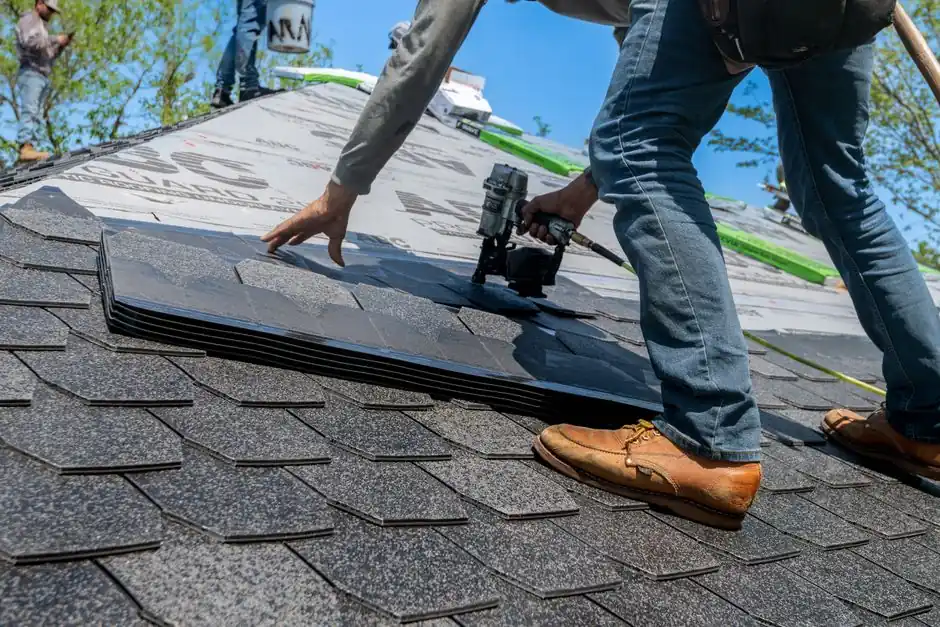
Full tear-off and disposal
We strip every existing layer down to the deck, load it into dumpsters, and haul it away. No shingle-over-shingle shortcuts, which add weight and hide rot you cannot see until it spreads.
Every install we quote covers the full assembly, not just the shingle field. If it keeps water out of your house, it is in the scope. Add-ons like skylight replacement or gutter guards are priced separately so you can see the difference.
We strip every existing layer down to the deck, load it into dumpsters, and haul it away. No shingle-over-shingle shortcuts, which add weight and hide rot you cannot see until it spreads.
We walk the bare deck board by board, re-nail loose sheathing, and replace any rotted roof decking before it gets covered. You get photos of what we found and what we replaced.
A minimum of three feet of ice and water shield runs up from every eave, plus full coverage in valleys and around penetrations. It is the single detail that prevents ice dams from backing water under your shingles.
New roof flashing at chimneys, walls, and skylights, plus aluminum drip edge along the rakes and eaves. Old flashing is the number one source of leaks we find on tear-offs.
We set a continuous ridge vent and confirm the intake at the soffits is clear. Balanced ventilation keeps attic heat down, which extends shingle life and cuts ice dam formation.
We register the manufacturer system warranty and hand you the workmanship term in writing. One document covers the shingle, one covers our labor, and both transfer with the house.
Roof installation in New York is the full replacement of your roof system, not a patch: tear-off of the old shingles, inspection and repair of the roof decking, new underlayment, ice and water shield in the valleys and eaves, roof flashing at chimneys and walls, drip edge, and a finished field of asphalt shingles or TPO membrane. We set the ridge vent, seal every penetration with roofing cement, and hand-nail the starter course so wind uplift does not peel the first row.
New York roofs take a beating that roofs in milder states never see. Ice dams form at the eaves after a freeze-thaw cycle, wind uplift pulls fasteners out of older decks, and hail damage shows up as bruised matting you cannot spot from the ground. If you are searching for professional roof installation in New York near me, the honest answer is that the work has to be done before the next hard freeze, not after the first leak stains your ceiling.
Five stages, one crew, no surprise line items. Here is exactly what happens from the first walk on your roof to the final magnet sweep of the driveway.
Schedule
Call or book online — a real human picks up and confirms a 2-hour arrival window.
Diagnose
Licensed tech inspects on-site, then walks you through the cause and your options.
Fix
The job is completed to code and done right the first time — no shortcuts, no surprises.
Guarantee
Every job backed by a written workmanship warranty — and we stand behind it.
 Tools & Equipment
Roofing nailer and nail gun
Drives roofing nails to the exact depth and pattern the manufacturer specifies. Over-driven or under-driven nails are the leading cause of wind uplift on new roofs.
Pry bar and shingle cutter
Strips old courses without tearing the deck and cuts clean shingle edges at valleys, hips, and rake lines for a straight, sealed finish.
Chalk line and roofing hammer
Sets the course lines so every row runs true across the roof. Hand-nailing the starter course and ridge caps is still the standard on detail work.
Roofing ladder and safety harness
Rigged before anyone steps on the roof. Fall protection is not optional on a steep New York pitch, and it is the first thing we set up on site.
Roofing torch
Used on modified bitumen and flat roof details to heat-weld seams and seal around penetrations where a membrane needs a watertight bond.
GAF Master Elite installation standards
We follow the manufacturer's nailing pattern, underlayment layout, and ventilation requirements so the system warranty is valid. Skipping a step voids the coverage, which is why we document each stage with photos.
Ice and water shield at eaves and valleys
A minimum three-foot run up from the eave, plus full coverage in valleys and around chimneys. This is the detail that keeps ice dams and wind-driven rain out of your attic in a New York winter.
Balanced attic ventilation
Continuous ridge vent paired with clear soffit intake. Balanced airflow keeps the deck cool in summer and reduces the freeze-thaw cycling that cracks shingles and forms ice dams.
OSHA-compliant fall protection
Harnesses, anchors, and ladder staging are rigged before tear-off. It slows the start by 20 minutes and keeps the crew safe for the two to three days the job runs.
01
What we do: We inspect the deck, measure the squares, and quote a full tear-off with new underlayment, flashing, and ventilation. If the deck is solid and only one slope is worn, we will price a partial replacement instead.
→ You stop paying for repeat repairs and get a registered warranty that covers the whole assembly, not just the patch.
02
What we do: We tarp the open section the same day, photograph the damage from the roof and the attic, and build a scope that matches the adjuster's line items. We work the claim with you, not around you.
→ The covered damage gets rebuilt to code, and you are not left paying out of pocket for the difference between the claim and the real cost.
03
What we do: We schedule to the framing stage, install underlayment and ice and water shield first so the structure stays dry, then return for the shingle field once the trades are clear.
→ The build stays on schedule, the interior stays dry, and the final roof is installed to manufacturer spec so the warranty holds.
04
What we do: We do a documented inspection with photos, quote the repair or install, and complete the work on a timeline that fits your closing date.
→ The objection is removed, the paperwork is in the file, and the sale moves forward without a price renegotiation over the roof.
New York roofs live in a freeze-thaw cycle that most of the country never sees. Snow sits on the north slope for weeks, melts at the eave, and refreezes into an ice dam that backs water under the shingles. That is why we run ice and water shield at every eave and keep the ridge vent clear, and why we schedule most installs between late summer and the first hard freeze. Building stock varies block to block: 1920s Victorians in Albany with steep pitches and multiple valleys, post-war ranches across Long Island with low-slope additions, and flat-roof garages that need TPO membrane instead of shingles. We pull the local permit, match the material to the pitch, and handle cold-weather shingle sealing when a job has to run in November. If you need a new roof installation New York with warranty coverage before winter, call and we will confirm your address and schedule the inspection.
Capital Region
Older housing stock with steep pitches and dormers. Ice dam protection at the eave is the detail that matters most here.
Hudson Valley
Tree cover means clogged gutters and moss on north slopes. We clear the drainage path before installing and add drip edge to shed water cleanly.
Long Island South Shore
Coastal wind uplift drives the nailing pattern. We hand-seal starter courses and ridge caps to hold the manufacturer's wind rating.
Westchester and Putnam
Mix of slate, shingle, and flat roof sections. Each gets its own detail plan, from copper flashing to heat-welded TPO seams.
Freeze-thaw cycles from December through March
Ice dams form at the eave and back water under the shingles. We install ice and water shield a minimum of three feet up and balance the attic ventilation to reduce the cycling.
Nor'easters and coastal wind uplift
Lifted shingles and torn ridge caps are common after a storm. We hand-seal the starter course and set fasteners to the manufacturer's pattern so the wind rating holds.
Summer attic heat above 130 degrees
Hot attics cook shingle matting from underneath and shorten roof life. A continuous ridge vent paired with clear soffit intake drops the deck temperature and extends the install.
Mixed pitch and flat roof sections
Shingles cannot shed water on a low slope. We switch those sections to TPO membrane and build in the drainage so ponding water does not sit on the seams.
Water always finds the cheapest way in. These are the failures we open up most often on New York roofs, and what happens if they sit through another season.
Problem
Meltwater pools behind the dam, works under the courses, and stains ceilings and insulation. Left alone, it rots the decking and the top plate of the wall.
Our Fix
We install ice and water shield at the eaves and balance the attic ventilation so snow melts off the roof instead of refreezing at the gutter. On existing dams, we clear the drainage path first, then rebuild the eave detail.
Problem
One lifted course exposes the underlayment, and the next storm takes the row behind it. You lose the wind rating on the whole slope and start chasing leaks.
Our Fix
We hand-seal the starter course, use the manufacturer's nailing pattern, and set ridge caps with the correct overlap. If the deck is sound, we can match and replace the damaged slope; if not, a full install is the cheaper long game.
Problem
Failed step flashing and pipe boots leak small amounts for years before showing up as a ceiling stain. By then the framing around the penetration is often soft.
Our Fix
We cut out the old flashing, install new step and counter flashing, and seal every pipe boot with roofing cement. It is a small line item on an install and the most common source of the leaks we get called back for.
Problem
Standing water finds every seam in a TPO membrane and shortens its life by years. It also adds load to the structure and grows algae that eats the surface.
Our Fix
We rebuild the slope with tapered insulation, install a new TPO membrane with heat-welded seams, and confirm the drains run clear. Flat sections get their own detail plan, not a shingle patch.
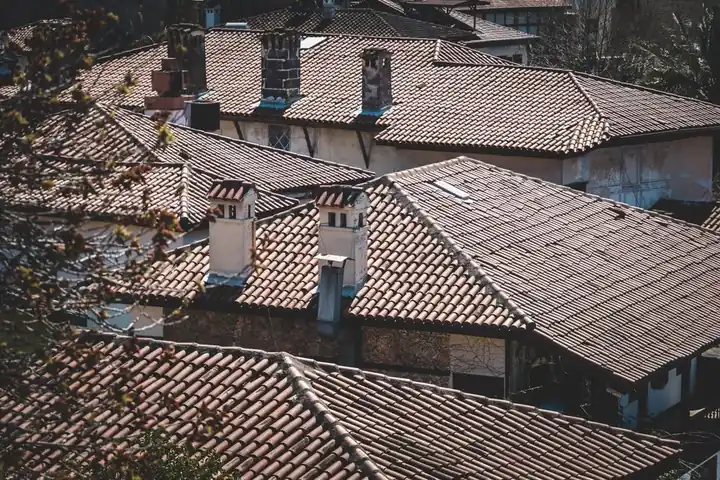
A new roof is the one exterior upgrade that pays you back in lower heating bills, fewer repair calls, and a house that sells without a roofing contingency. Here is what a proper installation buys you.
Stops leaks at the source
Most leaks we open up trace back to flashing failure or a nail popped through old underlayment, not the shingles themselves. Rebuilding the whole assembly, including ice and water shield and new roof flashing, closes every entry point at once instead of chasing water across the ceiling for another season.
Cuts ice dam damage
New York roof installation services that skip eave protection fail the first January thaw. We run ice and water shield a minimum of three feet up from the eave and keep the ridge vent clear so attic heat escapes instead of melting snow that refreezes at the gutter line.
Locks in a warranty
A new roof installation New York with warranty coverage is only as good as the installer behind it. We register manufacturer systems, so the shingle and the workmanship are both documented, and you get a written term you can hand to a buyer or an insurance adjuster.
Raises curb appeal and resale
A 25-year architectural shingle in a current color reads as a maintained house. Buyers and inspectors look at the ridge line, the drip edge, and the flashing first. A clean, code-correct install removes the biggest negotiating chip a seller can hand over.
Roof pricing comes down to squares, pitch, layers, and material. A typical 1,800 to 2,500 square foot home in New York runs $9,500 to $22,000 for asphalt shingle, with 2026 installed pricing near $5.50 to $8.50 per square foot. Flat TPO sections, steep pitches, and multiple tear-off layers push the number up; a simple gable with one layer keeps it down. We quote the squares and the material line so you can see exactly what you are paying for, and we register the warranty the day we finish.
Typical Investment Range
$9,500 - $22,000 depending on size, pitch, and material
A roof is the one exterior system that protects everything under it. Spending on the deck, the flashing, and the ice and water shield is what keeps the warranty valid and keeps water out of your ceilings for the next 25 to 30 years.
What changes the price
Roof size in squares
One square is 100 square feet of roof surface. A 2,000-square-foot home with a moderate pitch usually measures 22 to 26 squares, and material and labor scale directly with that number.
Number of tear-off layers
Each additional layer of old shingles adds disposal weight and labor. Two layers can add 15 to 25 percent to the job, and three layers may require a full deck rebuild.
Pitch and roof complexity
Steep pitches need more staging and slower, safer work. Valleys, dormers, and multiple chimneys add flashing detail, which is where most of the labor hours go on a complex roof.
Material selection
Three-tab sits at the low end, architectural shingles in the middle, and premium lines like Owens Corning Duration or GAF Timberline at the top. Flat TPO membrane is priced separately from shingle.
Decking and structural repair
Rotted roof decking, soft fascia, or damaged sheathing gets replaced at a per-sheet price. We photograph what we find so you see the repair before it is covered.
Permits and inspections
Most New York municipalities require a roofing permit for a full tear-off or structural change. The fee varies by town and is passed through at cost, with the paperwork kept in your warranty file.
Google ★★★★★4.9
Quoted the roof in one visit and itemized the squares. Tear-off and install took three days, and they ran magnets over the lawn twice. The ice and water shield along the eave is the detail that stopped our ice dam problem.
Yelp ★★★★★4.8
Storm took shingles off our front slope on a Friday night. They tarped it Saturday morning and had the insurance photos ready by Monday. Full rebuild with new flashing and ridge vent, and the ceiling stain has not come back.
BBB ★★★★★4.9
We manage three rentals and needed a roofer who shows up. They quoted all three roofs in one visit and finished the first in three days. Warranty was registered the same week, which is more than the last company did.
Our crews install roofs across New York State, from steep Victorian pitches in Albany to low-slope flat sections on Long Island. We hold a New York State Home Improvement Contractor License, carry OSHA safety certification, and work to NRCA membership standards on every job. That means fall protection is rigged before anyone steps on the roof, and the details that fail first, the valleys, the pipe boots, and the chimney flashing, get the same attention as the field. We install to manufacturer spec so the warranty holds, and we document the deck condition before we cover it.
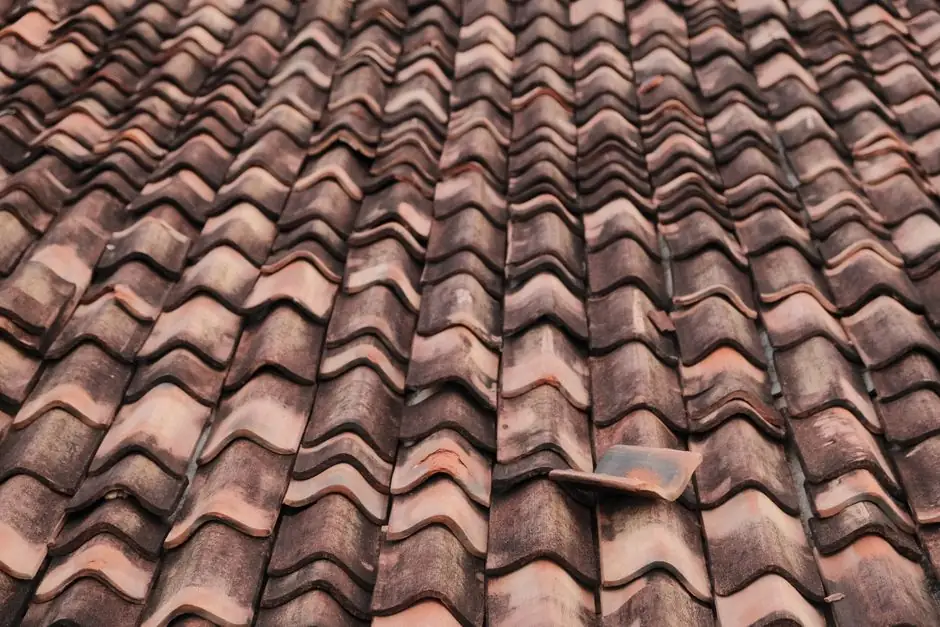
We run roof installation crews across New York State, from the Capital Region through the Hudson Valley and down onto Long Island. Whether you need a tear-off in Albany or a flat roof rebuilt in Harrison, the same materials, the same warranty, and the same crew standards apply. Call (833) 829-2623 and we will confirm coverage for your town the same day.
Steep-pitch Victorians and older colonials dominate Albany. We handle multi-layer tear-offs, dormer flashing, and ice dam protection at the eave, with permits pulled through the city.
Coastal wind uplift drives the nailing pattern in Bayville. We hand-seal starter courses and ridge caps to hold the manufacturer's wind rating on exposed waterfront slopes.
Large, complex roofs with valleys, dormers, and multiple chimneys are common in Briarcliff Manor. We price the flashing detail separately so you see where the labor goes.
Post-war ranches and capes across Centereach usually carry one or two layers of shingle. We tear off to the deck, replace any soft sheathing, and install a full system in two to three days.
Tree cover in Cornwall means moss on north slopes and clogged gutters. We clear the drainage path, add drip edge, and install shingles rated for the freeze-thaw cycle.
Salt air and coastal storms wear roofs in East Quogue faster than inland. We use corrosion-resistant flashing and hand-seal the ridge line to stand up to wind-driven rain.
Dense housing in Franklin Square means tight lots and careful staging. We protect the neighboring property, run magnets over the lawn, and finish most installs in two to three days.
Harrison has a mix of shingle, slate, and flat roof sections. Each gets its own detail plan, from copper flashing to heat-welded TPO seams on the low-slope areas.
Holbrook ranches and colonials often need decking repair along with the tear-off. We photograph the bare deck and replace rotted roof decking before the new system goes down.
Ice dams form fast on Islip Terrace roofs after a January thaw. We run ice and water shield a minimum of three feet up from the eave and balance the attic ventilation.
Levittown's original capes are hitting the end of their roof life. We tear off the old layers, upgrade the ventilation, and install architectural shingles with a registered warranty.
Hudson Valley weather in Marlboro brings heavy snow loads and spring rain. We build the eave detail for ice dams and set the flashing to shed water away from the walls.
Middletown roofs see hard freeze-thaw cycles and summer heat. We pair ice and water shield at the eave with a continuous ridge vent to keep the deck dry and cool.
Wooded lots in Montrose drop debris on the roof every fall. We clear the gutters, check the flashing, and install a system that sheds water cleanly through the winter.
From Brooklyn rowhouses to Bronx multifamily buildings, New York roofs need flat and low-slope systems done right. We install TPO membrane and shingle with permits pulled through the city.
Real answers to the questions we hear most often from local homeowners and property managers.
Full tear-off and rebuild when the existing roof is past patching. We strip to the deck, replace rotted boards, and install a complete new system, which is the same scope as roof installation once the old layers come off.
View Roof ReplacementTargeted fixes for missing shingles, flashing failure, and small leaks. If your roof is under 15 years old and the deck is sound, a repair often beats a full install, and we will tell you which one you actually need.
View Roof RepairWe trace the leak to its source, not the stain on your ceiling. Most calls trace back to pipe boots, chimney flashing, or valley underlayment, and we seal it the same day so the next rain does not find it again.
View Roof Leak RepairA full walk of the roof, attic, and flashing, with photos and a written condition report. It is the first step of every installation quote and the cheapest way to find hail damage or ice dam wear before it becomes a claim.
View Roof InspectionAnnual gutter clearing, sealant touch-ups, and flashing checks. Two visits a year keeps clogged gutters and ponding water off your roof and extends the life of the installation by years.
View Roof Maintenance24/7 tarp-overs and temporary sealing after storms, fallen limbs, or sudden leaks. We stop the water first, document the damage, and schedule the permanent repair or install once the weather clears.
View Emergency Roofing ServicesCall (833) 829-2623 any time, day or night. Our phone is answered around the clock for emergency leaks and storm damage, and standard estimates are booked within 24 to 48 hours. You can also email [email protected] with photos of the problem and we will get back to you the same business day.
Phone
(833) 829-2623Address
New York
Hours
Mon–Fri: 7AM – 7PM
Sat: 8AM – 4PM
Sun: Emergency Only
24/7 Emergency Available